

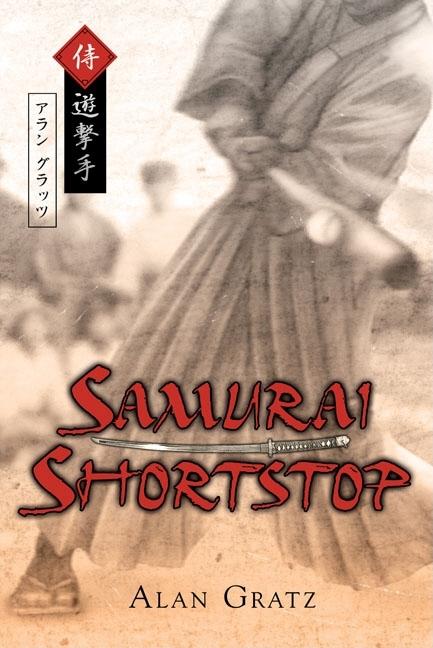
Book Resume
for Samurai Shortstop by Alan Gratz
Professional book information and credentials for Samurai Shortstop.
3 Professional Reviews
1 Book Award
Selected for 2 State/Province Lists
“Toyo watched carefully as his uncle prepared to kill himself.” From ...read more
- Publisher's Weekly:
- Ages 12 and up
- TeachingBooks:*
- Grades 7-12
- Word Count:
- 59,142
- Lexile Level:
- 790L
- ATOS Reading Level:
- 4.9
- Cultural Experience:
- Asian
- Genre:
- Historical Fiction
- Sports
- Year Published:
- 2006
17 Subject Headings
The following 17 subject headings were determined by the U.S. Library of Congress and the Book Industry Study Group (BISAC) to reveal themes from the content of this book (Samurai Shortstop).
- Juvenile Fiction | School & Education
- Fathers and sons--Fiction
- Schools
- Fathers and sons
- Samurai--Fiction
- Juvenile Fiction | Sports & Recreation | Baseball
- History
- Boarding schools--Fiction
- Schools--Fiction
- Samurai
- Juvenile Fiction | Historical | Asia
- Japan
- Baseball
- Japan--History--Meiji period, 1868-1912--Fiction
- Meiji period, 1868-1912
- Baseball--Fiction
- Boarding schools
3 Full Professional Reviews
The following unabridged reviews are made available under license from their respective rights holders and publishers. Reviews may be used for educational purposes consistent with the fair use doctrine in your jurisdiction, and may not be reproduced or repurposed without permission from the rights holders.
Note: This section may include reviews for related titles (e.g., same author, series, or related edition).
From Cooperative Children's Book Center (CCBC)
“Toyo watched carefully as his uncle prepared to kill himself.” From an opening sentence that commands full attention, readers are plunged into a story of cultural change, peer pressure, a faltering father-son relationship, and baseball. In 1890 Japan was in the Meiji Restoration period, transitioning from a feudal society to an industrial nation. Samurai struggled to find a place within this rapidly evolving culture. Fifteen-year-old Toyo is from a family of samurai, and he is both honored and horrified to watch his Uncle Koji commit seppuku . Permission for this ritual suicide has been granted by the emperor for Koji’s participation in a samurai uprising, as an honorable alternative to execution. Toyo fears his father’s seppuku will be next, and that anxiety is compounded by his entry into a prestigious boarding school, where violent hazing is a tradition endured by all first-year students. Toyo’s love of (and skill for) the emerging sport of baseball helps sustain him during this difficult time. Compelling sports scenes are deftly balanced with Toyo’s school and family life, combining into a finely crafted historical novel. A welcome note at the conclusion provides additional insight into the evolution of baseball in Japan, as well as the author’s choices in writing a historical novel that will resonate with contemporary teens. (Ages 13–16)
CCBC Choices 2007 © Cooperative Children's Book Center, Univ. of Wisconsin - Madison, 2007. Used with permission.
From Publisher's Weekly
May 22, 2006
Debut novelist Gratz uses baseball to tell the story of Japan's tumultuous transition from 19th-century feudalism to 20th-century Westernized society. In the harrowing first chapter, 15-year-old Toyo witnesses his uncle commit seppuku
—ritual suicide—rather than renounce his samurai lifestyle as the emperor has ordered. As required by custom, Toyo's father decapitates his brother, and Toyo must watch because, his father says, "Soon you will do the same for me." Toyo then begins life at Ichiko, Tokyo's most elite boarding school, haunted by the image of his father tossing his uncle's head onto the funeral pyre. The violence soon becomes more personal, as Ichiko's upper classmen conduct vicious hazing rituals to keep the first-years in line. His father arrives daily to instruct Toyo in bushido
—the "samurai code"—which includes sword-fighting but also meditation and flower arranging. Toyo channels these skills into his passion for a new sport introduced by American gaijin—besuboru.
Into this well-researched period piece, Gratz drops a few anachronistic sports clichés, climaxing with a Big Game against a team of Americans. Though Toyo finds a way to use the samurai values his father has taught him, his leadership skills don't develop enough for him to protest or withdraw from aiding the enforcement of a brutal punishment against a boy who has strayed from Ichiko's harsh rules, undermining the sympathy readers may have developed for him. Still, this is an intense read about a fascinating time and place in world history. Ages 12-up.
From Kirkus
Set in the late 1800s in a changing Japan, this story is about baseball--and more. After witnessing his uncle's ceremonial suicide, Toyo is accepted to an elite school, where he works to earn a place on the baseball team. In his attempts to understand the ways of the samurai, Toyo gains personal insight and applies his new knowledge to his favorite pastime. An accomplished actor, Arthur Morey does an acceptable job of relaying the story. However, the intriguing and well-researched plot would be better served with a more dramatic production, and, despite the strength of the story, the producers may miss opportunities to connect young listeners to a foreign place and time. B.H. (c) AudioFile 2008, Portland, Maine
1 Book Awards & Distinctions
Samurai Shortstop was recognized by committees of professional librarians and educators for the following book awards and distinctions.
 CCBC Choices, Selection, 2007
2 Selections for State & Provincial Recommended Reading Lists
Samurai Shortstop was selected by educational and library professionals to be included on the following state/provincial reading lists.
United States Lists (2)
Indiana
- Eliot Rosewater Indiana High School Book Award, 2009-10
Pennsylvania
- Pennsylvania Young Reader's Choice Awards - Young Adult, 2009
Preview Digital Book
Explore Samurai Shortstop on Marketplace. Access requires OverDrive Marketplace login.
This Book Resume for Samurai Shortstop is compiled from TeachingBooks, a library of professional resources about children's and young adult books. This page may be shared for educational purposes and must include copyright information. Reviews are made available under license from their respective rights holders and publishers.
*Grade levels are determined by certified librarians utilizing editorial reviews and additional materials. Relevant age ranges vary depending on the learner, the setting, and the intended purpose of a book.
Retrieved from TeachingBooks on April 01, 2026. © 2001-2026 TeachingBooks.net, LLC. All rights reserved by rights holders.
