

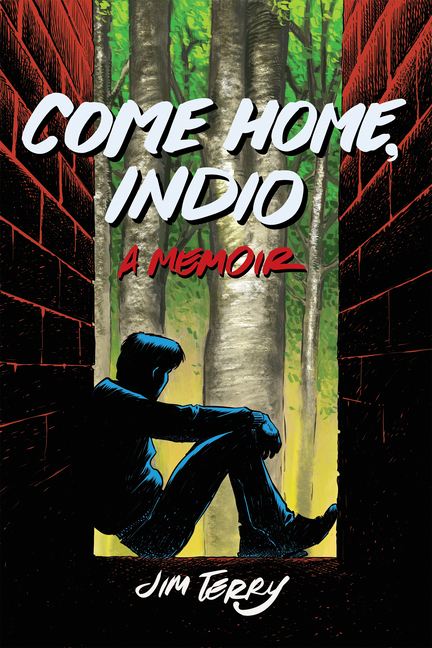
Book Resume
for Come Home, Indio: A Memoir by Jim Terry
Professional book information and credentials for Come Home, Indio.
3 Professional Reviews (2 Starred)
Selected for 1 State/Province List
- Grade Levels:*
- Grades 7-12
- Cultural Experience:
- American Indian
- Genre:
- Biography
- Nonfiction
- Graphic Novel
- Year Published:
- 2020
22 Subject Headings
The following 22 subject headings were determined by the U.S. Library of Congress and the Book Industry Study Group (BISAC) to reveal themes from the content of this book (Come Home, Indio).
- Alcoholism
- Graphic novels
- COMICS & GRAPHIC NOVELS--Nonfiction--Biography & Memoir
- FAMILY & RELATIONSHIPS--Bullying
- alcoholism
- Alcoolisme
- Peuples autochtones
- American Indian or Alaska Native
- Ho-Chunk Indians--Biography--Comic books, strips, etc
- Environmental Justice
- Terry, Jim (Artist)--Cartoons and comics
- Indians of North America--Alcohol use--Biography--Comic books, strips, etc
- Cartoonists--Cartoons and comics
- Indians
- Oil and Gas Industry
- Petroleum pipelines
- Indians of North America--Alcohol use
- Ho-Chunk Indians
- PSYCHOLOGY--Psychopathology--Addiction
- Petroleum pipelines--Standing Rock Indian Reservation (N.D. and S.D.)--Comic books, strips, etc
- Ho-Chunk--Biographies--Bandes dessine?es
- Terry, Jim (Artist)--Comic books, strips, etc
3 Full Professional Reviews (2 Starred)
The following unabridged reviews are made available under license from their respective rights holders and publishers. Reviews may be used for educational purposes consistent with the fair use doctrine in your jurisdiction, and may not be reproduced or repurposed without permission from the rights holders.
Note: This section may include reviews for related titles (e.g., same author, series, or related edition).
From Kirkus
November 15, 2020
Terry's graphic autobiography is a roller-coaster ride of doubt and discovery, addiction and recovery. The author's experiences growing up Ho-Chunk and Irish in the 1970s and '80s set the stage for an unflinching account of what it means to grow up Indigenous and American. As he describes how he split his time between the suburbs of Chicago and his reservation in Wisconsin, Terry chronicles the turmoil, injury, and excess of being raised by artistic, alcoholic parents. His Irish father worked as a jazz musician, and his Ho-Chunk mother was a feminist force of nature even as she battled lupus. When they divorced, Terry struggled to overcome the damage of domestic violence while making sense of the conflicting cultures in his life. Dumped by his Christian girlfriend and afraid that he would never fit in, his identity issues led him down the path to alcohol abuse. Covering his entire life from childhood to the present day with dark and evocative art, the author writes at a very fast clip, skimming over large sections of his adulthood with little explanation. What emerges is a portrait of an artist who was able to fully express himself only after getting sober and addressing his chaotic mental state. Conquering his addiction, Terry gained control of his craft and found ways to honor the sacrifices his ancestors made for him. Not just another Bukowski-like portrait of alcoholism and discontent, the book is unique in its depiction of Terry's struggles with Native identity issues, myths, politics, and histories. This tale of spiritual healing culminates with the author joining the Indigenous protest of the Dakota Access Pipeline at Standing Rock, where he learned the power of peaceful resistance. "It was astonishing," he writes, "and the opposite of how I'd been trained by the culture of fear." Ambitious in scope, the book breaks ground for contemporary Native portrayals in nonfiction.
COPYRIGHT(2020) Kirkus Reviews, ALL RIGHTS RESERVED.
From Booklist
Starred review from September 1, 2020
Terry, known for his outstanding superhero illustrations, turns the lens inward in this brutally honest memoir. His childhood, complicated and unstable as the son of two alcoholics who eventually divorced, was defined by shuffling between homes of both parents, paternal grandparents, and his maternal family in the Ho-Chunk Nation. His own addiction to alcohol began in his teens and eventually led to crippling self-destruction through years of blackout drinking. Alcoholics Anonymous offered a way out, and with sobriety, he rediscovered his passion for drawing, and the comic world is all the better for it. This is a dense, text-heavy work, but Terry covers a lot of complex emotional ground, particularly surrounding his biracial identity. Told chronologically, the latter chapters explore his growing success as an artist and tentative nurturing of his Indigenous roots through family reconnections and a transformative experience at the Standing Rock protests. The art serves the story incredibly well; nuanced and skillfully drawn, the expressive illustrations are very high contrast and so heavily inked they can feel oppressive at times, effectively heightening the deep emotional current throughout. While the panels are frequently tight and cramped early in the story, the final chapters are far more expansive and imbued with possibility. An exceptionally well-told story with no easy answers but an ending that will inspire.(Reprinted with permission of Booklist, copyright 2020, American Library Association.)
From Publisher's Weekly
Starred review from July 20, 2020
Terry, as a child growing up between households and cultures-his Irish American father's in the Chicago suburbs and his Native (Ho-Chunk) mother's in the Wisconsin Dells-gets told off by his dad: "You're too sensitive, Indio." But fortunately for readers of this raw and intimate graphic memoir, Terry never fully lets go of his youthful vulnerability. Terry begins his chronicle of his lifelong search for belonging with stories of being raised by parents whose good intentions are undermined by alcoholism and anger, and continues through his euphoric discovery of drinking as a teen and subsequent grim, drawn-out battle with his own addiction, before ending with his activism and spiritual awakening on the campgrounds at the Dakota Access Pipeline. Terry notes his attachment to Will Eisner and friendship with artist James O'Barr (the Crow series); their influence is evident in his expressive line drawings and distinctive shading. While he poignantly recalls his teenage girlfriend, he deliberately silhouettes adult romantic relationships, including a broken marriage (seemingly both for the women's privacy and to represent how they were overshadowed by his love affair with alcohol). In a stylistic shift, the sections around his travels to the pipeline, in which he processes the inherited trauma of his Native ancestry, are elaborated in full pages of text with atmospheric landscape and portrait drawings. Reckoning with sobriety requires connection and humility, as Terry makes the case for with sincerity and beauty, as he ties his recovery to his spiritual homecoming.
1 Selection for State & Provincial Recommended Reading Lists
Come Home, Indio was selected by educational and library professionals to be included on the following state/provincial reading lists.
United States Lists (1)
Wisconsin
Preview Digital Book
Explore Come Home, Indio on Marketplace. Access requires OverDrive Marketplace login.
This Book Resume for Come Home, Indio is compiled from TeachingBooks, a library of professional resources about children's and young adult books. This page may be shared for educational purposes and must include copyright information. Reviews are made available under license from their respective rights holders and publishers.
*Grade levels are determined by certified librarians utilizing editorial reviews and additional materials. Relevant age ranges vary depending on the learner, the setting, and the intended purpose of a book.
Retrieved from TeachingBooks on December 24, 2025. © 2001-2025 TeachingBooks.net, LLC. All rights reserved by rights holders.
